William Shakespeare’s plays have frequently been examined through psychoanalytic literary criticism. Sigmund Freud’s interpretation of Hamlet in The Interpretation of Dreams focused on the prince’s inhibited response to his father’s murder, which Freud connected to repressed Oedipal wishes. Jacques Lacan later returned to the play in his seminar on desire, placing greater emphasis on Hamlet’s relation to mourning, maternal desire, and the symbolic structures that shape his actions.
Macbeth does not present its protagonist’s parental relationships with the same clarity. Nevertheless, its recurring images of violence, hallucination, guilt, madness, and death make it particularly open to psychoanalytic interpretation. Trauma and repetition compulsion provide especially productive concepts for understanding the play. They illuminate not only the extreme emotional responses of Macbeth and Lady Macbeth but also the way violence repeatedly returns in the form of visions, gestures, and further acts of murder.
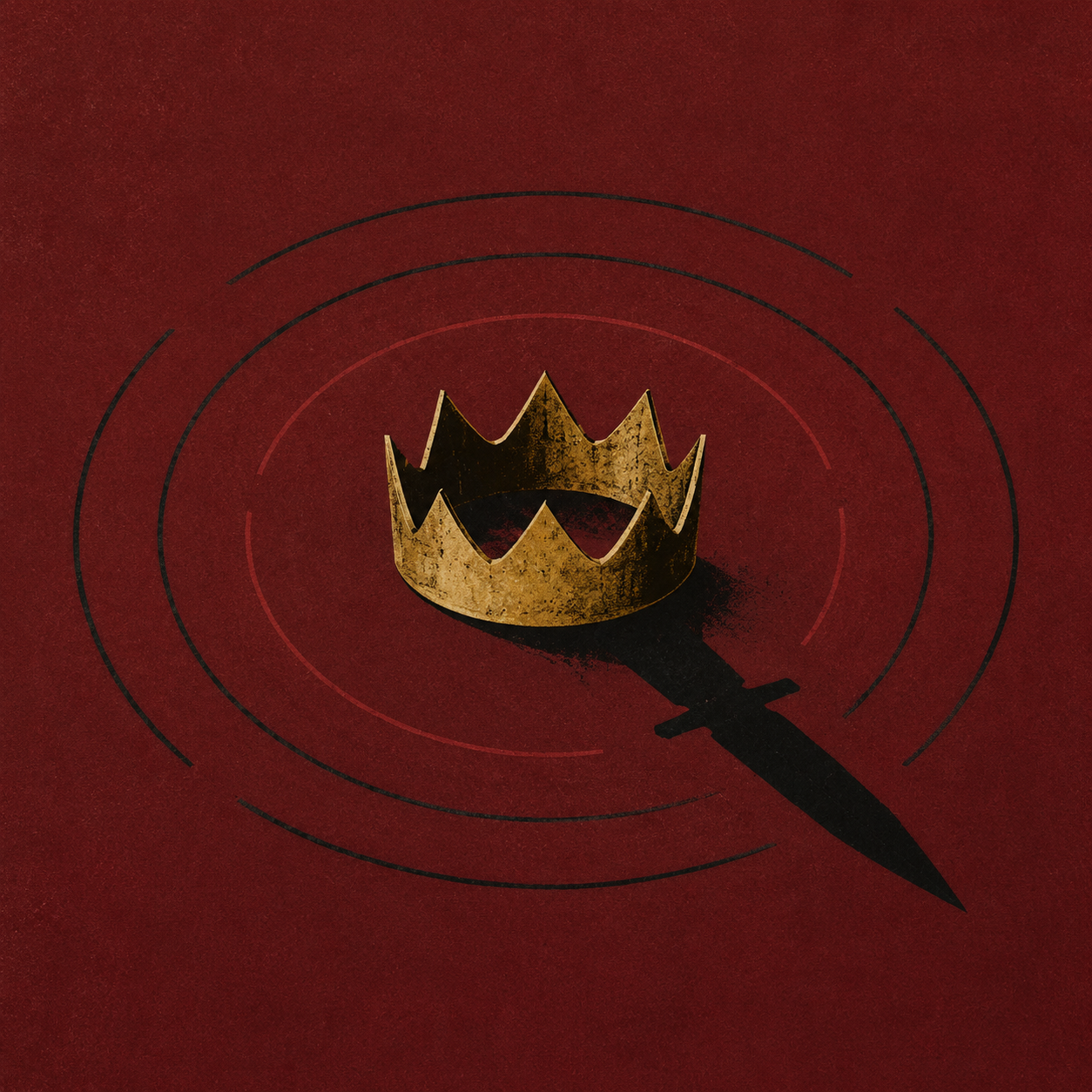
A psychoanalytic reading should not treat Shakespeare’s characters as patients to be clinically diagnosed. Instead, it can examine the dramatic forms through which psychic conflict becomes visible. In Macbeth, the imaginary dagger, Banquo’s ghost, Lady Macbeth’s compulsive hand-washing, and the circulation of the crown all suggest attempts to master experiences that continually resist being confined to the past.
Trauma as a Psychic Wound
The word trauma derives from a Greek term meaning “wound.” In its original sense, it refers to something that pierces the body from outside and leaves a lasting mark. Freud extended this image to the psyche. In Beyond the Pleasure Principle, he describes trauma as an overwhelming influx of excitation that breaks through the mind’s protective barrier. The psyche is unable to absorb or process the event in an ordinary way and must subsequently attempt to bind or master its effects.
This model helps explain the psychological intensity of Macbeth’s experience immediately before Duncan’s murder. In Act 2, Scene 1, Macbeth sees an imaginary dagger suspended before him. He attempts to grasp it but cannot. He then wonders whether it is merely “a dagger of the mind, a false creation” produced by his “heat-oppressèd brain.” The weapon appears increasingly real, eventually becoming covered in blood and leading him toward Duncan’s chamber. The full scene is available in the Folger Shakespeare edition.
The vision does not repeat an act that has already occurred. Instead, it anticipates and rehearses the murder. Macbeth’s imagination gives visible form to a violent intention that he has not yet fully transformed into action. The dagger therefore occupies an unstable position between thought and reality: it is not physically present, but it guides Macbeth toward the deed he has already contemplated.
Rather than simply representing repression, the vision stages Macbeth’s attempt to contain an overwhelming conflict. The imaginary weapon turns his own intention into what appears to be an external command. He is both the creator of the dagger and the person who follows it. The hallucination briefly organizes his fear, ambition, and uncertainty into a single image, but it cannot resolve them. Once Duncan is murdered, the violence imagined through the dagger returns in other forms.
Lady Macbeth and the Paternal Prohibition
Lady Macbeth initially appears more capable than her husband of treating murder as a practical means to political power. She questions Macbeth’s courage, associates masculinity with violence, and repeatedly urges him to act. Yet she is unable to murder Duncan herself. Her explanation is brief but revealing: “Had he not resembled / My father as he slept, I had done ’t.” This moment appears in Act 2, Scene 2.
The reference to her father introduces a limit that Lady Macbeth cannot simply overcome through determination. Duncan is not merely a political obstacle. As king, he occupies a paternal and symbolic position within the social order. Lady Macbeth wants him removed so that Macbeth—the man she loves and attempts to shape—can take his place. At the same time, Duncan’s resemblance to her father prevents her from carrying out the act herself.
This moment permits an Oedipal interpretation, although it should not be treated as proof of a straightforward psychological diagnosis. The image of the sleeping father interrupts Lady Macbeth’s instrumental approach to murder. It reveals an identification and prohibition that her conscious ambition cannot master. Duncan can be destroyed by Macbeth, but the symbolic position he represents cannot simply be eliminated.
After Duncan’s death, Lady Macbeth discovers that Macbeth cannot securely replace him. Instead of becoming an authoritative and stabilizing king, Macbeth becomes increasingly dependent on violence. He murders Banquo, persecutes his political enemies, and eventually orders the killing of Macduff’s wife and children. Each use of power exposes the insecurity of his position rather than confirming his authority.
Lady Macbeth’s later sleepwalking scene represents the return of what she attempted to dismiss. Immediately after Duncan’s murder, she tells Macbeth that “a little water clears us of this deed.” In Act 5, however, she repeatedly rubs her hands as if washing them and cries, “Out, damned spot.” Her movements compulsively reproduce the aftermath of Duncan’s murder. What she believed could be removed with water returns as an imaginary stain that cannot be erased. The scene is presented in Act 5, Scene 1.
The play thus dramatizes a form of repetition compulsion: the traumatic event returns not as an ordinary memory but as an involuntary action. Lady Macbeth’s body repeats what her conscious mind had attempted to overcome. Her fragmented speech also brings together several acts of violence, including the deaths of Duncan, Banquo, and Lady Macduff. The murders have ceased to exist as separate incidents; they have become parts of a single recurring scene.
Her eventual death, reported as an apparent suicide, marks the collapse of her attempt to master this repetition. Death does not resolve the trauma so much as reveal the destructive consequences of her inability to place it securely in the past.
Banquo’s Ghost and the Repetition of Violence
Macbeth’s encounter with Banquo’s ghost provides another dramatic representation of repetition compulsion. Macbeth has Banquo murdered because he views his former friend as both a rival and an obstacle to the continuation of his royal line. Yet Banquo’s death does not eliminate the threat. Fleance escapes, and Banquo himself returns at the royal banquet.
The ghost’s position is especially significant. It enters and sits in Macbeth’s place. Macbeth has obtained the crown, but the murdered rival now occupies the seat through which his authority is supposed to be displayed. The ghost disappears and then returns, repeating the confrontation within the same scene. The banquet therefore becomes a condensed image of Macbeth’s political condition: he possesses the title of king but cannot securely occupy its symbolic place. Banquo’s two appearances can be read in Act 3, Scene 4.
Macbeth initially murders Duncan in the hope of obtaining power. Once he becomes king, however, he discovers more enemies and greater insecurity. He then murders Banquo, believing that the removal of another obstacle will consolidate his position. Instead, Banquo returns as a ghost, and Fleance remains a future threat.
The same structure continues throughout the play: a perceived threat produces violence, violence produces another threat, and the new threat calls forth further violence. Macbeth’s efforts to secure his position consequently make it more unstable. The more he destroys in the name of power, the more powerless he becomes.
Kingship as a Signifier
Lacan’s reading of Edgar Allan Poe’s “The Purloined Letter” provides a useful model for interpreting this pattern. Lacan argues that the letter organizes the positions and actions of the characters independently of its hidden content. Whoever possesses it appears to gain power, but that person is also placed in a particular relationship of dependence. The subjects do not fully control the letter; its circulation determines their roles within the narrative. Lacan connects this movement to repetition and the “insistence of the signifying chain” in his “Seminar on ‘The Purloined Letter’”.
A similar structure can be identified in Macbeth. The crown functions as more than a material object or political office. It becomes a signifier of authority, legitimacy, succession, and imagined completeness. In Lacanian terms, it may be understood as occupying a phallic position: it represents the power that characters believe would finally eliminate their uncertainty and dependence.
Macbeth assumes that possessing the crown will make him complete and secure. Yet the crown immediately subjects him to new demands. He must conceal his crime, prevent Banquo’s descendants from succeeding him, eliminate political opponents, and preserve the appearance of legitimacy. Kingship therefore possesses Macbeth as much as Macbeth possesses kingship.
This dynamic also clarifies the difference between Duncan and Macbeth. Duncan’s authority rests upon an established symbolic and dynastic order. Macbeth attempts to seize that authority through violence and then tries to make it real by repeatedly exercising coercive power. Every such exercise, however, exposes the absence of the legitimacy he seeks. He can wear the crown and command assassins, but he cannot force the symbolic order to recognize him as its rightful embodiment.
Poe’s stolen letter has power partly because it remains unused: once its possessor attempts to use it openly, its special power disappears. Macbeth encounters a comparable paradox. He seeks absolute power, but the more visibly and violently he uses royal authority, the more he destroys the conditions that could sustain it.
At the end of the play, the crown passes to Malcolm, Duncan’s son. In this sense, kingship returns to the dynastic line from which Macbeth attempted to remove it. Yet this return should not be understood simply as the recovery of a physical object. The crown circulates as a symbolic position that none of its temporary possessors can entirely control.
The Failure of Mastery
Trauma in Macbeth is not represented merely as a terrible event. It is an event that fails to become fully past. Duncan’s murder returns in the imaginary blood on Macbeth’s dagger, in Lady Macbeth’s endlessly stained hands, and in the ghostly reappearance of Banquo. Each return signals an unsuccessful effort to master the consequences of violence.
Repetition compulsion likewise operates at both psychological and political levels. Macbeth and Lady Macbeth repeat images, gestures, and actions in an effort to gain control over what they have done. Macbeth also repeats murder as a political strategy, believing that each new act will finally secure his authority. Instead, repetition deepens their dependence on the original crime.
The crown provides the structural center of this process. Macbeth imagines it as the final object of desire, but once acquired it reveals itself as a position that cannot be securely possessed. His attempt to master power through violence leaves him governed by fear, prophecy, and the necessity of further violence.
Through the dagger, the ghost, the bloody hands, and the returning crown, Shakespeare presents violence as something that resists closure. The characters act repeatedly in order to master their situation, yet every repetition places them more firmly under the power of what they seek to control. In Macbeth, trauma returns because murder cannot be confined to the moment in which it occurs, and power remains elusive because its symbolic authority can never be reduced to possession alone.
Works Cited
Freud, Sigmund. Beyond the Pleasure Principle. Translated by C. J. M. Hubback, International Psycho-Analytical Press, 1922.
Freud, Sigmund. The Interpretation of Dreams. Translated by A. A. Brill, Macmillan, 1913.
Lacan, Jacques. Desire and Its Interpretation: The Seminar of Jacques Lacan, Book VI. Edited by Jacques-Alain Miller, translated by Bruce Fink, Polity, 2019.
Lacan, Jacques. “Seminar on ‘The Purloined Letter.’” Écrits.
Shakespeare, William. Macbeth. Folger Shakespeare Library.
Leave a comment
Comments come straight to me — they aren't posted publicly on the page.