This essay is adapted from my Turkish-language CultPost podcast episode, first released in October 2023. It has been translated and edited for international readers while preserving the original argument, examples, and critical assessment. The Netflix series is known internationally as “The Club” and originally as “Kulüp” in Turkish.
Spoiler warning: This essay discusses both seasons and the ending.
Netflix’s The Club begins as the story of a mother and daughter. Matilda Aseo, a Sephardic Jewish woman released from prison in 1950s İstanbul, attempts to reconnect with Raşel, the daughter from whom she was separated in infancy. To remain close to her, Matilda begins working at a nightclub in Beyoğlu.
The series soon expands beyond family reconciliation. Through Matilda and Raşel, it returns to a period in which İstanbul’s multilingual and multireligious culture was being violently narrowed. Changes in capital ownership, entertainment, ideology, and politics enter the characters’ private lives.
The first season is especially powerful in making neglected historical experiences visible to a mainstream audience. The second season continues this historical engagement and introduces an autobiographical narrative device. Yet it is less convincing in its rapid character transformations, its intermittent memoir frame, and its movement from workplace conflict toward an insufficiently earned image of communal harmony.
Minority Life and Historical Violence
For international viewers, Beyoğlu requires some cultural context. Historically known as Pera, it was one of İstanbul’s principal districts of embassies, theaters, taverns, restaurants, and modern nightlife. It was also strongly associated with the city’s Greek Orthodox, Armenian, Jewish, and Levantine communities.
The series restores this cultural plurality partly through language. Matilda and Raşel belong to İstanbul’s Sephardic Jewish community and speak Ladino, or Judeo-Spanish, as well as Turkish. Ladino developed among Jews expelled from the Iberian Peninsula who settled in the Ottoman Empire after 1492. Hearing the language in a globally distributed Turkish series gives public presence to a community largely absent from mainstream screen culture.
The series also places two major historical traumas at the center of its story. The first is the 1942 Wealth Tax, known in Turkish as Varlık Vergisi. Although officially introduced as a wartime tax on wealth, it was imposed disproportionately and arbitrarily on non-Muslim citizens. Jewish, Armenian, and Greek families faced ruinous demands; many were forced to sell homes and businesses, and those unable to pay could be sent to labor camps.
The policy contributed to a transfer of capital from non-Muslim citizens to a Muslim Turkish bourgeoisie. In The Club, it destroys Matilda’s family business and contributes to her father’s death. Political discrimination therefore becomes inseparable from family trauma and romantic betrayal.
The first season culminates in the pogrom of September 6–7, 1955. Organized attacks targeted primarily İstanbul’s Rum—Greek Orthodox—community, while Armenian and Jewish people and properties were also attacked. Homes, businesses, churches, schools, and cemeteries were looted or destroyed. The violence accelerated the departure of non-Muslim residents and permanently transformed the city.
By placing these events within a popular drama, The Club contributes to historical reckoning. It portrays İstanbul not as an eternally homogeneous city but as a place shaped by communities later pressured to leave, assimilate, or withdraw from public life.
Family Memory as Counter-History
The series gains additional significance from its relationship to writer Rânâ Denizer’s family history. Matilda, Raşel, and İsmet were inspired by her grandmother, mother, and father. The story emerged from family memories and anecdotes, although it combines them with fictional characters and altered chronology.
This mixture of memory and invention does not turn the series into a transparent historical record. Instead, family memory functions as a form of counter-history. Political events are approached through names, meals, songs, religious practices, relationships, and intergenerational silences.
The characters do not exist only to illustrate minority suffering. They possess desire, humor, jealousy, ambition, and contradiction. Jewish culture appears as a lived social world rather than as an ethnographic decoration.
The women’s experiences also show how historical discrimination intersects with gender and class. Matilda is vulnerable not only as a Jewish citizen but also as a woman, worker, former prisoner, and mother separated from her child. Raşel experiences another combination of pressures. Her relationship with İsmet, a Muslim man, connects love with secrecy, assimilation, and belonging. At times she uses the more conventionally Turkish name Aysel, revealing how discrimination can operate through pressure to conceal language and identity.
The Nightclub: Exploitation and Chosen Family
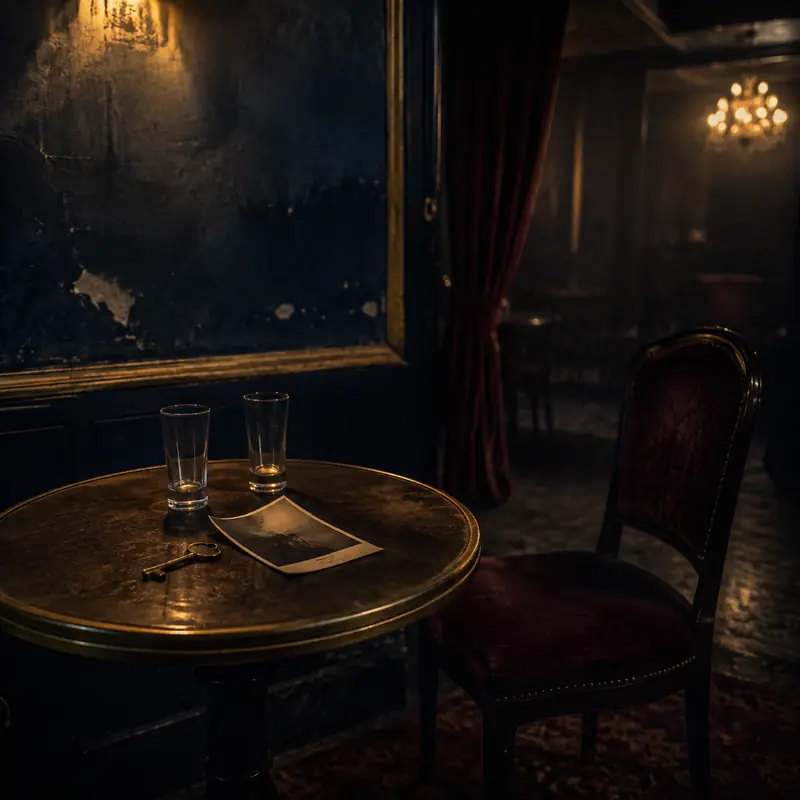
The nightclub is the series’ most productive symbol because it is never simply a safe haven. In the first season, it is an authoritarian workplace. Employees are humiliated, their labor is exploited, and management is associated with surveillance, coercion, and gendered violence. The glamour of the stage depends on a harsh backstage hierarchy.
At the same time, the club creates possibilities for expression and solidarity. Selim Songür, its flamboyant star, represents an entertainment culture in which gender nonconformity can become publicly visible, even if not openly named. The workers and performers gradually form a chosen family among people excluded from conventional family, nation, or respectability.
The common table, or sofra, becomes the central symbol of this solidarity. In Turkish culture, the word refers not only to dining furniture but also to hospitality, shared memory, and the act of making room for others.
This transformation is emotionally powerful. The difficulty is that the second season allows the common table to resolve the club’s earlier contradictions too easily. A workplace marked by exploitation and abuse becomes an almost ideal home before those histories have been fully confronted. Reconciliation appears, but the labor and accountability required to produce it remain incomplete.
The Autobiographical Pact
The second season introduces the adult voice of Rana, Raşel and İsmet’s daughter and Matilda’s granddaughter. A mature woman narrates the past while a child named Rana grows up within the club. This device establishes an explicitly autobiographical dimension.
Philippe Lejeune’s concept of the autobiographical pact is useful here. In its classical form, the pact describes an agreement in which author, narrator, and protagonist share an identity, inviting readers to approach a text as an account of the author’s life.
The Club is not a conventional autobiography. It is a collaborative historical drama that combines family memory with fiction. Nevertheless, the second season creates an autobiographical effect: Rânâ Denizer is among the writers, Rana becomes the narrator, and a child named Rana enters the story.
The problem is that the season never clearly establishes the position from which the adult Rana speaks. Is she remembering her childhood, reconstructing stories inherited from Matilda and Raşel, or functioning as an omniscient narrator with access to events she could not have witnessed?
The series remains an ensemble story centered largely on Matilda, while Rana’s voice implies that the story belongs to her. The adult narrator never appears to close the frame or explain why she is telling this history. Her voice gives the narrative the emotional authority of testimony without becoming its consistent organizing perspective.
This ambiguity could have been productive if inherited memory had become a more explicit subject. Descendants often know family trauma through fragments, silences, photographs, and stories. Instead, the autobiographical device remains intermittent and does not fully transform the narrative.
Rapid Redemption and Incomplete Transformation
The second season’s character arcs reveal a similar problem. Transformation is often announced more quickly than it is dramatized.
Çelebi begins as an abusive manager associated with humiliation and violence. In the second season, he becomes Matilda’s calm companion and one of the club’s moral guardians. Redemption is possible, but convincing redemption requires accountability and visible struggle. His earlier conduct recedes before the series has fully made him answer for it.
İsmet also changes rapidly. After an emotionally evasive life, he returns and attempts to become Rana’s father. The decision is plausible, but the inner conflict producing it receives limited attention.
Keriman’s jealousy and ambition culminate in the deaths of Selim and Matilda. A late revelation concerning her child attempts to explain her actions through economic desperation and maternal survival. Yet the information arrives too late to provide continuity to her characterization.
Raşel’s shoplifting is another underdeveloped thread. It appears connected to grief, instability, or a desire for control, but the series does not explore its meaning or show how the behavior ends. It simply disappears from the story.
These compressed developments make the second season more conventionally melodramatic. Characters change because the plot requires reunion, betrayal, or tragedy rather than because the audience has been allowed to experience the movement between moral positions.
The Ambiguous Meaning of the 1960 Coup
The final episode closes with the military coup of May 27, 1960. A young law student associated with democratic protests welcomes the intervention. Those gathered at the table remain largely silent until İsmet asks how people demanding democracy and freedom can celebrate a military takeover.
The scene reflects a historical contradiction. The Democrat Party government had become increasingly authoritarian, and some students, intellectuals, and secular elites initially greeted the coup as liberation. The 1961 Constitution later expanded a number of civil and social rights, which helps explain why the intervention was described in some circles as a revolution.
Yet the coup dissolved parliament, subjected elected politicians to military tribunals, and led to the execution of Prime Minister Adnan Menderes and two ministers. It also established a precedent for military tutelage over civilian politics.
The series treats the Wealth Tax and the 1955 pogrom with clear moral force. When the coup arrives, however, its critical response is concentrated mainly in İsmet’s brief objection. A drama devoted to historical trauma should remain equally alert to the idea that antidemocratic violence becomes acceptable when exercised for supposedly progressive purposes.
Remembering Without Simplifying
Despite these reservations, The Club remains an important achievement. It places Sephardic Jewish women at the center of a major Turkish production, allows Ladino to be heard by an international audience, and introduces the Wealth Tax and the 1955 pogrom into popular historical consciousness.
Its second season is not weakened because it chooses hope or reconciliation. The chosen family can be a politically meaningful response to exclusion. The problem is that hope becomes convincing only when it retains the weight of the violence it seeks to overcome. A common table cannot by itself erase exploitation, abuse, assimilation, or state coercion.
The series is at its strongest when it preserves the nightclub’s contradictions: glamour and labor, refuge and control, cultural plurality and national homogenization, family memory and public silence. These tensions prevent cosmopolitan İstanbul from becoming a decorative image of the past.
The Club matters because it asks why so many people were driven from the common table—and what genuine belonging would require from those who remained.
Leave a comment
Comments come straight to me — they aren't posted publicly on the page.